
A Learjet carrying nine people was flying toward the Bahamas when it encountered a dangerous storm high above Florida.
In the final moments of the flight, the crew reportedly described ice forming on the aircraft and severe turbulence. A request to climb higher followed — a decision now drawing scrutiny as aviation experts examine what may have happened.
One expert believes the pilots should have turned away from the storm rather than attempting to climb through it. But investigators have not determined what caused the crash, and no official finding of pilot error has been made.
With wreckage scattered miles from the impact site, investigators are working to reconstruct the flight’s final moments and establish how a journey toward the Bahamas ended in tragedy.
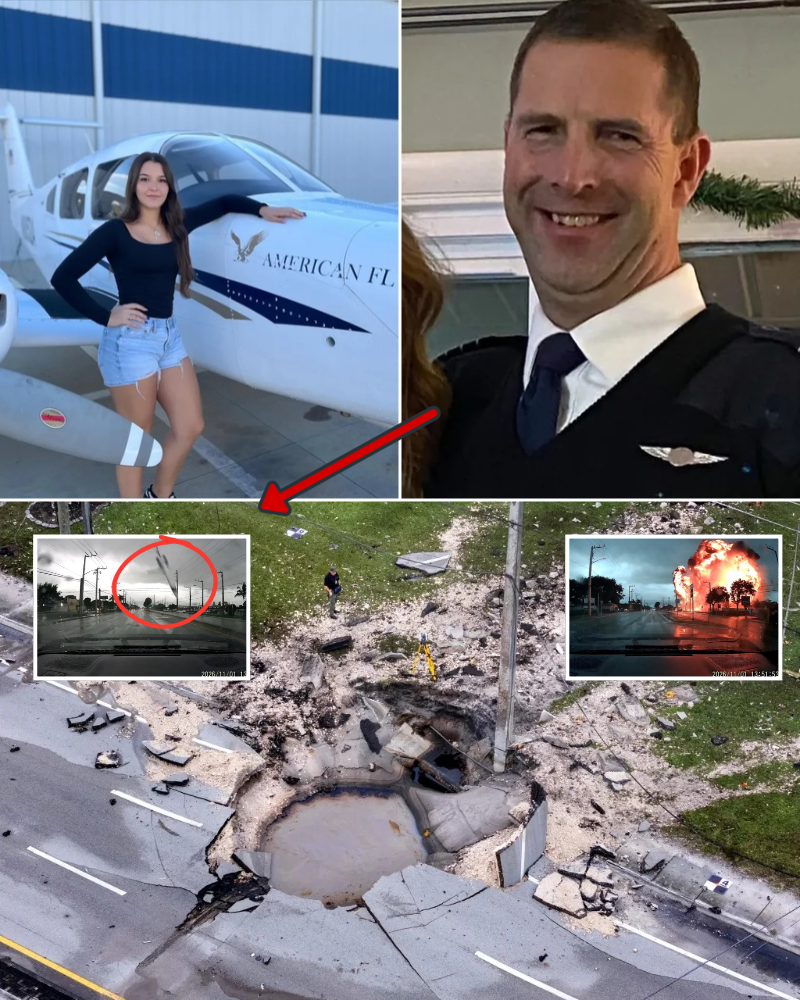
A FLIGHT INTO DANGEROUS WEATHER
The Learjet was travelling toward the Bahamas when it encountered severe weather above Florida.
The crew reportedly reported ice forming on the aircraft and turbulence as conditions deteriorated.
Ice accumulation can be a serious concern in aviation because it may affect an aircraft’s aerodynamic performance. Severe turbulence can also make it difficult for pilots to maintain control and safely manage the aircraft.
However, the precise weather conditions encountered by the Learjet, and their role in the crash, have not yet been established by investigators.
The reported cockpit communications are now among the details being examined as authorities attempt to understand what happened before the aircraft went down.
THE REQUEST TO CLIMB
As the situation reportedly worsened, the crew requested to climb to a higher altitude.
That decision has prompted questions about whether the aircraft was attempting to get above the storm or whether the manoeuvre placed it in even more challenging conditions.
One aviation expert has argued that the pilots should have turned away from the storm instead.
The expert’s view raises an important question about the options available to the crew as the weather deteriorated: whether changing course could have reduced their exposure to dangerous conditions.
But that remains an expert assessment, not an official conclusion.
Investigators have not determined whether the request to climb contributed to the crash, whether the crew had other viable options, or whether any particular decision was responsible for the outcome.
NO OFFICIAL FINDING OF PILOT ERROR
The circumstances surrounding the final moments of the flight remain under investigation.
Although the reported cockpit communications have prompted discussion, investigators have not announced a finding that the pilots made an error.
Aviation accident investigations typically examine multiple factors, including weather, aircraft performance, maintenance, flight data, crew communications and the sequence of events leading to impact.
A single decision or radio exchange cannot, by itself, establish the cause of a crash.
The expert’s comments may help frame questions for further examination, but they should not be confused with an official determination of responsibility.
WRECKAGE SCATTERED ACROSS THE IMPACT AREA
The wreckage was reportedly scattered miles from the impact site, adding to the challenge of reconstructing what happened.
Investigators must examine the recovered aircraft components and available evidence to determine the sequence of events.
The distribution of wreckage may form part of that analysis, but it does not independently establish why the aircraft crashed.
Authorities have not yet provided a definitive explanation for the destruction of the Learjet or confirmed the precise sequence of events in its final moments.
PIECES OF THE FINAL FLIGHT STILL BE MISSING
The reported ice accumulation, severe turbulence and request to climb have become central points of interest as the investigation continues.
Each detail may help investigators build a clearer picture of the conditions facing the crew.
But key questions remain unanswered: How severe was the weather? What options were available to the pilots? Did the aircraft’s performance change as conditions worsened? And what ultimately caused the Learjet to crash?
At this stage, those questions cannot be answered with certainty.
The nine lives lost have left families and loved ones facing profound grief, while investigators continue the painstaking work of establishing what happened.
WHAT REALLY HAPPENED ABOVE FLORIDA?
The expert’s criticism of the decision to climb has brought renewed attention to the crew’s final reported actions.
Yet the investigation has not established that the manoeuvre caused or contributed to the crash, and no official finding of pilot error has been made.
For now, the final moments of the flight remain a sequence of reported communications, weather concerns and physical evidence that investigators are still trying to piece together.
Until their findings are released, the central question remains unanswered: what happened to the Learjet as it encountered the storm — and why did the flight end in such devastating loss?







Leave a Reply